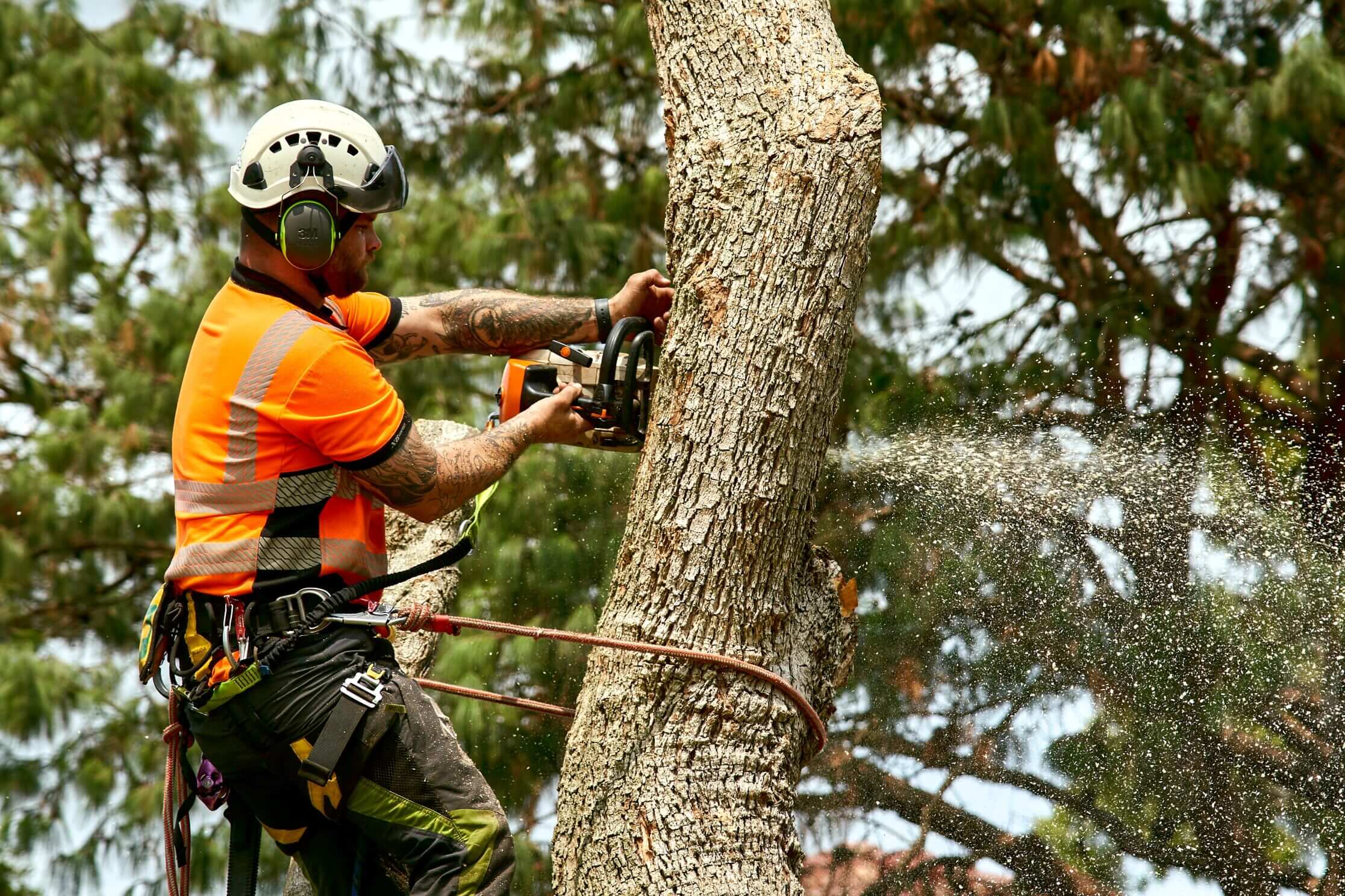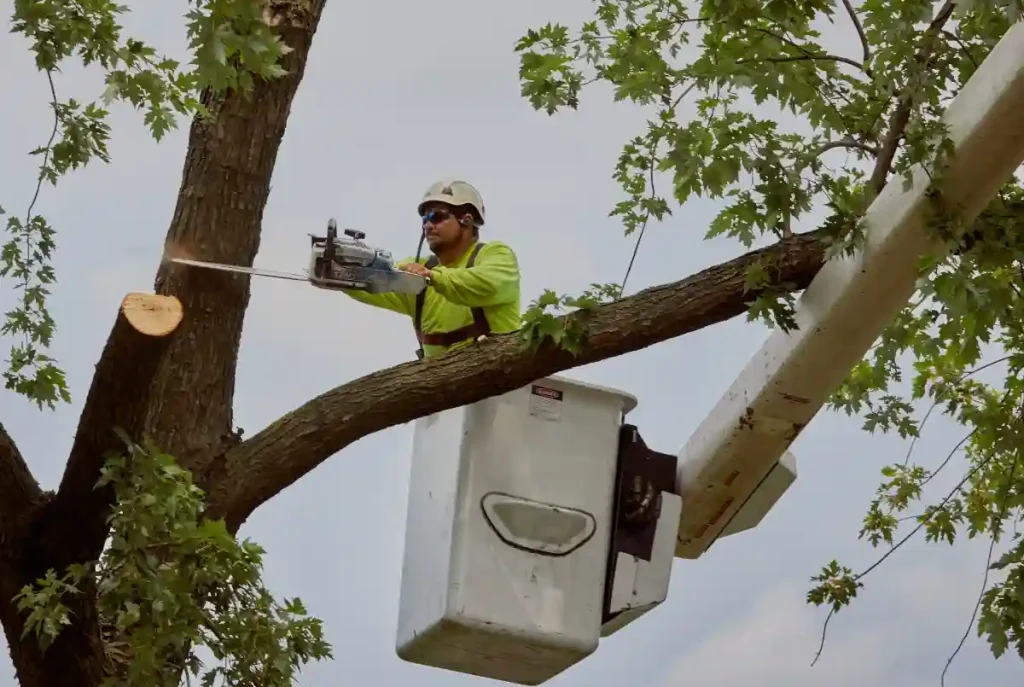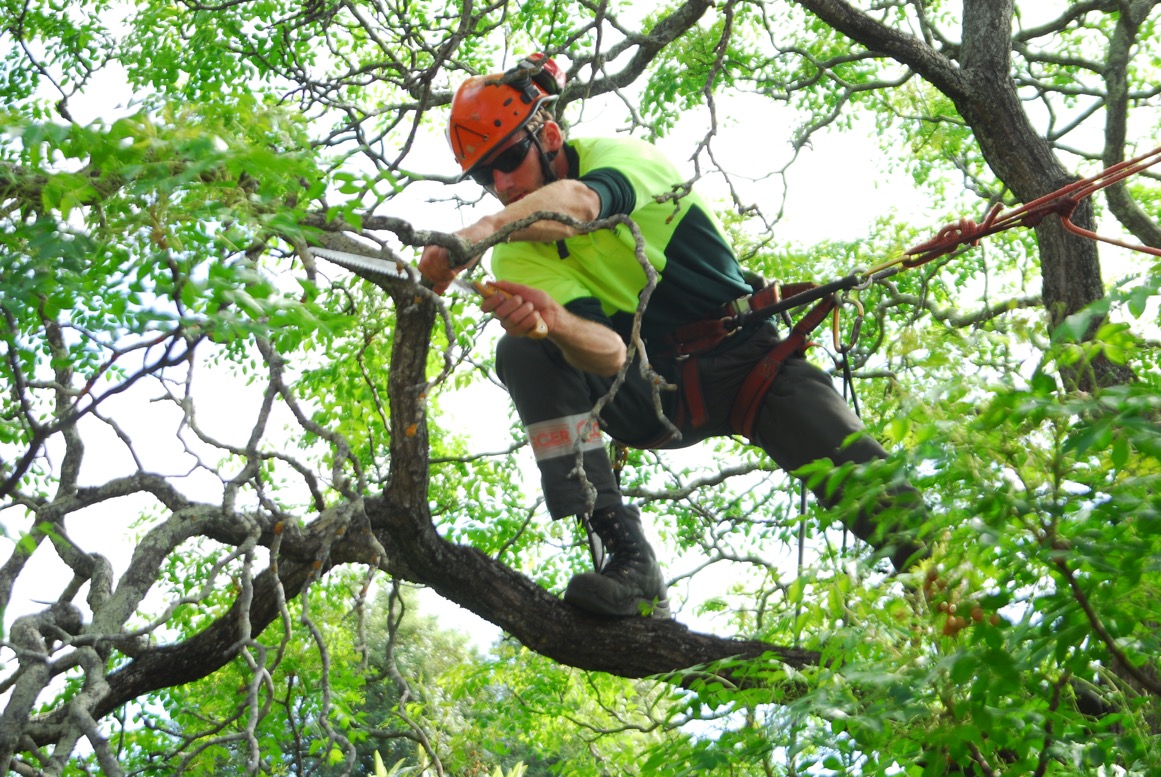
“Tree services near me” is a proximity search, but proximity is only the third most useful thing about a local contractor. The first is that they already know your council’s tree controls. The second is that they know how the species on your street behave in your soil and your storms. Sydney is not one market; it is dozens of micro-markets separated by sandstone ridges, clay flats, coastal exposure and thirty-odd sets of local planning rules.
This guide covers why local matters in practical terms, where to search beyond the first page of results, how to verify what you find, and how to brief a contractor so the quotes you receive are actually comparable.
Why locality changes the job
Council controls vary meaningfully between adjacent areas. A tree that is exempt in one local government area needs a permit two streets away, and thresholds for height, trunk diameter and distance from a dwelling all differ. Contractors who work a defined patch submit applications there weekly and know which exemptions the assessing officer accepts. The statewide framework is common, set out in SEPP (Biodiversity and Conservation) 2021 and lodged through the NSW Planning Portal, but the local application is what determines your outcome.
Site conditions matter just as much. Sandstone soils on the North Shore, shrink-swell clays through the west, and salt-laden wind on the coast produce different root architecture, different failure modes and different disease pressure. A crew that has dismantled fifty Sydney blue gums in your suburb prices your tree services accurately. A crew from ninety minutes away guesses.
Where to look
Your council
Start with the council website rather than a directory. Most publish tree management pages, permit forms, exemption lists and guidance on choosing an arborist. Useful examples include City of Sydney, Northern Beaches, Inner West, Ku-ring-gai, City of Parramatta, The Hills Shire and Blacktown. Reading your own council’s requirements first means you brief contractors instead of being briefed by them.
Search and maps
Search “arborist” plus your suburb rather than “tree lopper”, and read the two- and three-star reviews rather than the five-star ones. Look for repeated mentions of clean-up quality, quoted price holding, and how the business behaved when something went wrong. Sort by review volume over time rather than raw rating; a business with 180 reviews across six years is a more reliable signal than one with 22 in a single month.
Neighbours and strata
The single best lead source in Sydney is the house down the street that had a big tree removed cleanly last year. Local community groups and strata managers hold institutional memory about which crews turn up on time and which leave a mess.
Verifying what you find
Confirm the ABN is active on the Australian Business Register and that the entity name matches the quote. Ask for AQF qualification details, benchmarked against the Australian Qualifications Framework and typically delivered through TAFE NSW. Request current public liability and workers compensation certificates; workplace safety obligations for tree work sit with SafeWork NSW. Ten minutes of verification eliminates the overwhelming majority of bad outcomes.
What a full-service local operator offers
- Removal, including sectional dismantling in tight access
- Pruning to AS 4373, with crown reduction, thinning and lifting
- Stump grinding and site restoration
- Emergency and after-hours storm response
- Tree health assessment, pest and disease diagnosis
- Arborist reports for council, insurance and development
- Green waste removal, chipping and mulch supply
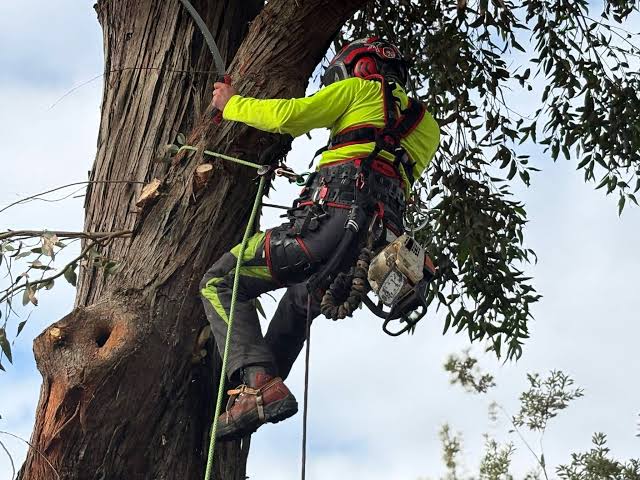
Briefing for comparable quotes
Describe the tree honestly: approximate height, trunk girth, distance to structures, what is underneath, and whether powerlines or a pool are involved. Photograph it from the base, from across the street and from above if you can. Then ask every contractor to quote the same defined scope. If you let each one define their own scope, you are comparing three different jobs and the cheapest will simply be the smallest.
Timing and seasonality
Demand spikes after East Coast Lows and summer storm cells, and prices follow. If your work is not urgent, book in a quiet window and you will get better crews at better rates. Warnings and forecasts from the Bureau of Meteorology are a reasonable planning input, as is the NSW Rural Fire Service guidance if your property sits in a bush fire prone area, since vegetation management there interacts with fire risk rules.
Local, sustainable and worth keeping
Good local operators chip on site, return mulch to customers, and process timber rather than sending it to landfill; the framework for lawful handling of that material is set by the NSW Environment Protection Authority. They also tend to plant replacements, which matters given the canopy targets councils are working toward and the urban heat research coming out of the Hawkesbury Institute for the Environment. Find one that checks out, then keep their number. Trees are a long-term relationship whether you planned one or not.