
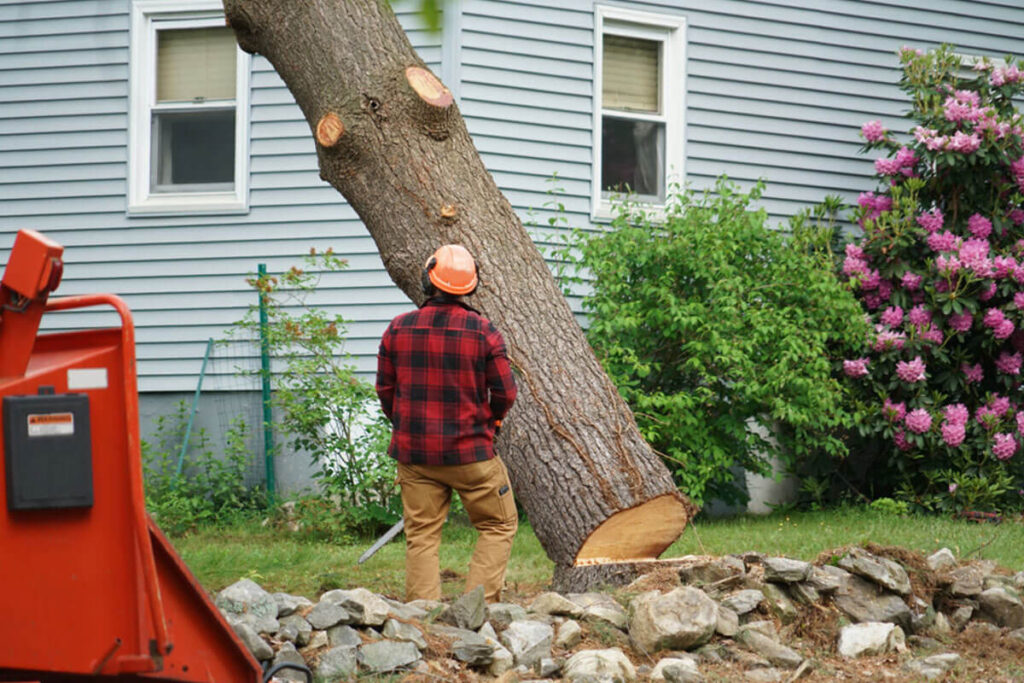
Below is what is typically included in a standard scope, plus the common extras that should be agreed in writing.
What does “tree services” usually cover?
Most tree services companies cover inspection, access planning, the agreed cutting work, waste handling, and a basic tidy-up. The exact mix depends on the tree size, the site, and whether the work is pruning, felling, or stump removal.
A proper scope should name the tree(s), describe the work in plain language, and state what happens to the arisings.
What happens before any cutting starts?
They normally carry out a quick site assessment and confirm the specification before tools come out. This includes checking access, overhead cables, sheds, fences, fragile ground, and where debris can safely fall.
They should also confirm permissions where relevant, such as Tree Preservation Orders or conservation area rules, because these can change what is allowed.
What is included in a standard pruning or crown work scope?
For pruning jobs, the scope usually defines what will be removed and how far. Common items include crown thinning, crown lifting, crown reduction, deadwood removal, and clearance from buildings or roads.
A good scope avoids guesswork. It should specify targets such as “reduce by up to 2 metres” or “maintain natural shape”, rather than vague promises like “cut it back”.
What is included in a standard tree removal scope?
For removals, the scope usually states whether the tree is to be felled in one piece (straight felling) or dismantled in sections (rigging and lowering). It should also state the final height, such as “fell to ground level”.
They typically include cutting the main stem and limbs, controlling the drop zone, and making the site safe at the end of the day.
Is stump removal part of a standard tree job?
Usually, stump removal is not included unless it is listed. Many “tree removal” quotes include felling only, leaving a stump at or near ground level.
If stump removal is needed, the scope should say whether they will stump grind, treat the stump to prevent regrowth, or excavate it. It should also state how far below ground the grindings will go.
What waste removal and clean-up is typically included?
A standard scope often includes chipping small branches and removing logs, chips, and debris from the work area. Some clients prefer to keep logs for firewood or keep chips for mulch, so the scope should say what will be taken away versus left on site.
Clean-up usually means a rake and blow of the immediate area, not a deep garden restoration. If they will cut logs to a certain length or stack them, it should be written down.
What equipment and safety measures are normally included?
They typically include the labour, climbing gear or access equipment, chainsaws, rigging kit, and barriers or cones if needed. A standard scope should also reflect safe working practices, such as controlled lowering near greenhouses, roads, or neighbouring gardens.
If traffic management is required, or if a MEWP, crane, or road closure is needed, those are usually listed as separate items.
What is usually excluded unless agreed?
Many disputes come from assumptions. Common exclusions include stump grinding, disposal of very large timber rounds, repairing lawns and borders, removing ivy from walls, fence repairs, and cleaning gutters or roofs.
They may also exclude working around hidden hazards such as buried cables, unmarked drains, or unsafe structures. A clear scope will state exclusions plainly.
Other Resources : Buildings and Grounds Maintenance and Compliance

How should they describe the job scope in the quote?
They should describe the work so a non-expert can picture the outcome. That means identifying each tree, the main objective (reduce, lift, remove), the extent of pruning, and the waste plan.
It should also include practical details like start date window, access requirements, whether they need side gate clearance, and what happens if weather or permissions delay the work.
What questions should someone ask before approving the scope?
They should ask what exactly will be cut, what will be left, and what “tidy-up” means in practice. They should also ask whether stump treatment or grinding is included, whether logs and chips will be removed, and how the team will protect lawns, patios, and borders.
Finally, they should ask who checks for permissions and whether the company is insured for the type of work being quoted.
Related : Tree Cutting: When Is It Better Than Full Tree Removal
FAQs (Frequently Asked Questions)
What does a standard tree services job scope typically include?
A standard tree services job scope usually provides a clear list detailing what the team will do, what they will not do, and what will be left behind. It covers inspection, access planning, the agreed cutting work such as pruning or felling, waste handling, and a basic tidy-up. The scope should name the specific tree(s), describe the work in plain language, and state how arisings (debris) will be managed.
What should happen before any tree cutting work begins?
Before any cutting starts, the team typically carries out a quick site assessment to confirm the specification. This includes checking access routes, overhead cables, nearby structures like sheds or fences, fragile ground conditions, and safe debris drop zones. They should also verify permissions such as Tree Preservation Orders or conservation area rules that could affect what work is allowed.
What is usually included in a standard pruning or crown work scope?
A standard pruning or crown work scope defines exactly what parts of the tree will be removed and by how much. Common tasks include crown thinning, crown lifting, crown reduction, deadwood removal, and clearance from buildings or roads. The scope should specify measurable targets like “reduce by up to 2 metres” or “maintain natural shape” to avoid vague terms like “cut it back.”
Is stump removal typically included in tree removal services?
Stump removal is usually not part of a standard tree removal job unless explicitly listed. Many quotes for ‘tree removal’ cover only felling the tree down to near ground level, leaving the stump intact. If stump removal is required, the scope should specify whether stump grinding, treatment to prevent regrowth, or excavation will be done and detail how far below ground level grindings will go.
What waste removal and clean-up services are commonly provided in tree service jobs?
Standard scopes often include chipping small branches and removing logs, chips, and debris from the immediate work area. Some clients may choose to keep logs for firewood or chips for mulch; therefore, the scope should clarify what materials will be taken away versus left on site. Clean-up generally involves raking and blowing leaves rather than deep garden restoration. Any special requests like log cutting to length or stacking should be documented.
What exclusions should I expect unless specifically agreed in writing?
Common exclusions in tree service jobs include stump grinding (unless listed), disposal of very large timber rounds, repairing lawns and garden borders damaged during work, removing ivy from walls, fence repairs, and cleaning gutters or roofs. Work around hidden hazards such as buried cables or unmarked drains may also be excluded. A clear job scope will plainly state these exclusions to avoid misunderstandings.